
Toa Payoh Ascent Sun Analysis
See how sunlight reaches each room in your unit
Why Avoiding Afternoon Sun is Crucial
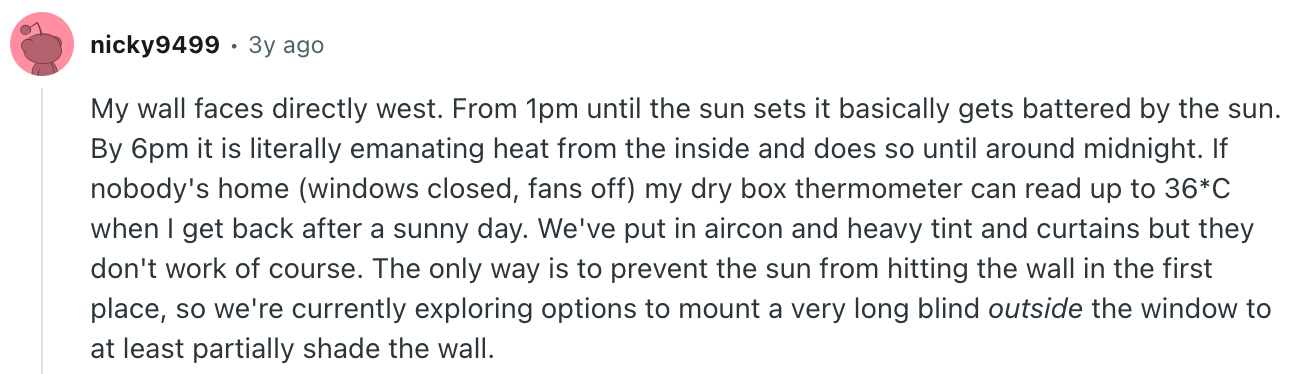
1. Heat Retention
Concrete walls absorb afternoon sun and radiate heat indoors well past midnight.
See discussion on Reddit →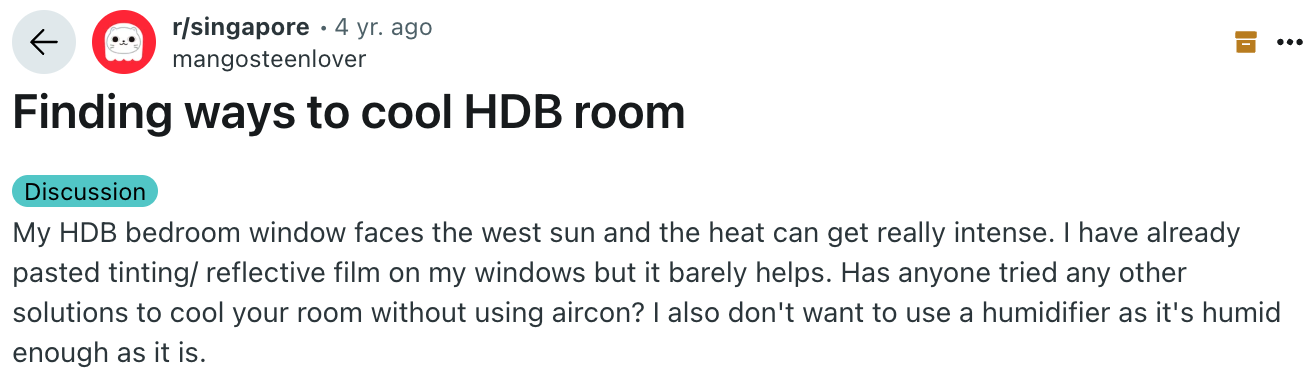
2. No Easy Fix
Fans, tinting, and curtains help a little but none fully solve it.
See discussion on Reddit →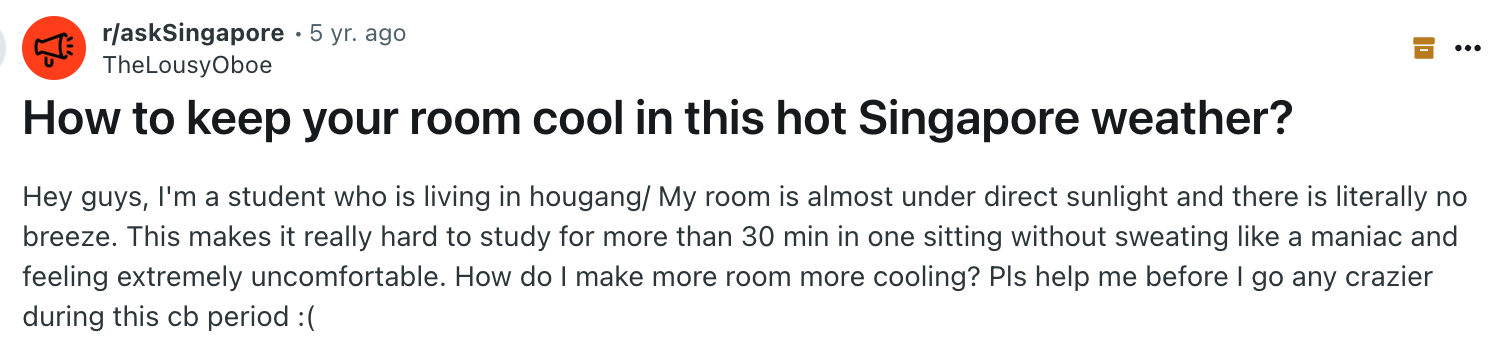
3. WFH & Daily Discomfort
Sun-facing rooms make it hard to study or work from home without aircon running all day.
See discussion on Reddit →The good news? You can avoid all of this by checking your unit's sun exposure before you pick your unit.
View Your Unit's Sun Analysis
Unit not listed? Let us know →
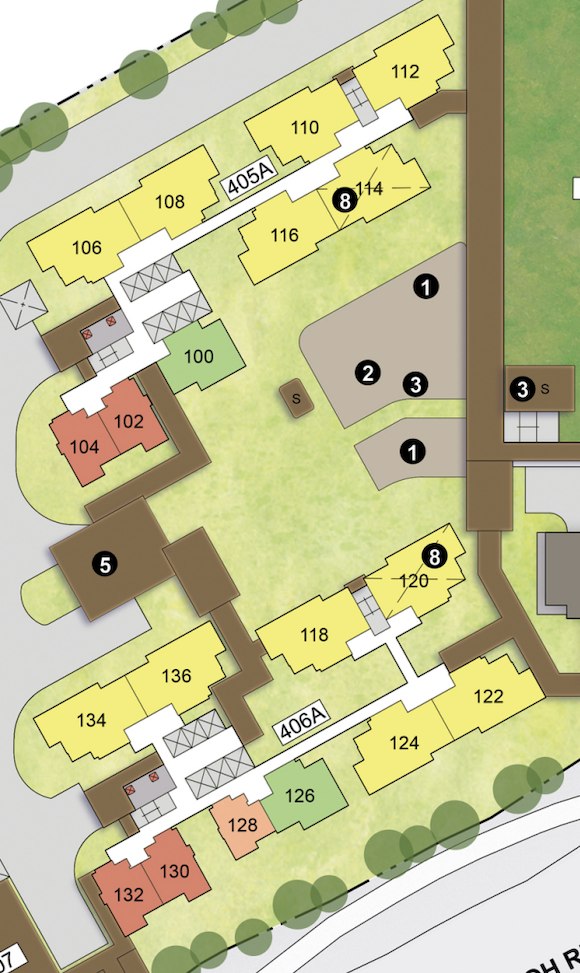 Tap to find your block
Frequently Asked Questions
What should I look for when choosing a unit to avoid afternoon sun?
Pick units where bedrooms and living areas face away from the west. The sun path shifts throughout the year, so a per-unit analysis is more reliable than a compass check.
How accurate is the sun analysis?
We use the project's coordinates and actual floorplan data to calculate how sunlight enters each room throughout the year.
Does the analysis consider how deep the sun penetrates into my rooms?
No. Sun depth depends on how surrounding buildings or structures block sunlight, which is difficult to model. The tool gives you a gauge of the direction that the sun enters the unit, not the depth.
Does the analysis factor in surrounding buildings?
We account for adjacent units and corridors within the same block. Other buildings in the development that may block the sun are not modelled due to data limitations.
I've already selected my BTO unit — is this still useful?
Yes. Knowing your sun exposure helps plan renovation, like where to place curtains, your study desk, or whether every room needs aircon.
Why focus specifically on afternoon sun?
Morning sun is mild. Afternoon sun (12pm to 6pm) is far more intense and heats concrete walls that radiate indoors well into the evening.
Have questions or issues? Reach out to us at support@btoanalysis.com.